AI is Excellent at Analyzing Data. HR Specialists Are Essential for Talent Decisions.
Why Artificial Intelligence Cannot Fully Replace Human Expertise in Recruitment
Digital transformation has fundamentally changed the way organizations identify, attract, and evaluate talent. Artificial intelligence is already being used across many human resources processes to analyze large volumes of information, automate repetitive tasks, and improve operational efficiency.
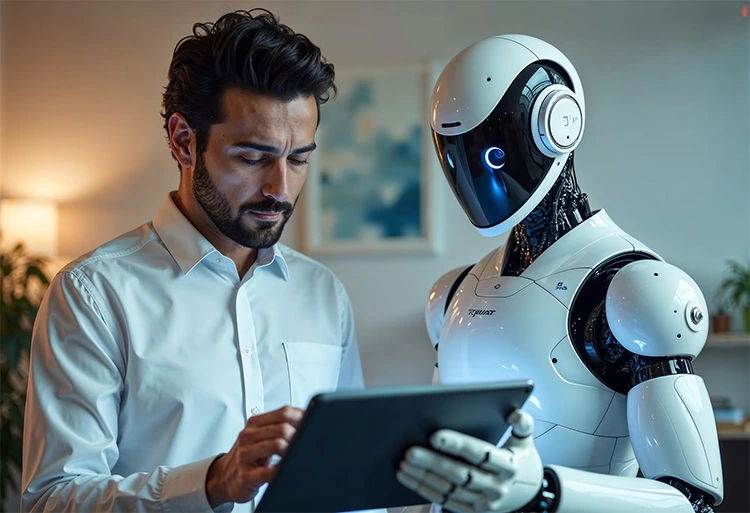
In complex organizations, where the number of applications can be significant, AI-based solutions provide an important advantage: speed and processing capability.
However, strategic recruitment is not only about identifying a profile that matches a list of requirements. It is about understanding people, organizational context, and long-term potential.
Research from Deloitte highlights that organizations should approach artificial intelligence as a capability that enhances human decision-making rather than replacing it. In human resources, the combination of technology, data, and professional expertise enables companies to make more informed talent decisions while maintaining the human perspective required for effective leadership and organizational development.
AI is excellent at analyzing documents. HR specialists are essential for analyzing people.
Beyond the CV: The Difference Between Data and Insight
A CV is a collection of information about professional experience, education, and skills. Artificial intelligence can process this data quickly and identify potential matches between candidate profiles and role requirements.
However, successful hiring decisions are not determined only by technical alignment.
An experienced HR specialist evaluates elements that cannot be fully extracted from a document:
- the candidate’s ability to adapt to a complex environment;
- communication and collaboration style;
- alignment with organizational values;
- professional motivation;
- growth potential;
- ability to contribute to business objectives.
In corporate environments, where hiring decisions directly influence teams and organizational performance, these factors are critical.
The Risk of Making Recruitment Decisions Based Exclusively on Algorithms
Automation brings significant benefits to recruitment processes, but relying exclusively on algorithms can also create risks.
An AI system analyzes available information and makes recommendations based on predefined criteria. If a valuable candidate does not use specific keywords or does not follow a traditional career path, their potential may be overlooked.
Professional experience is not always linear. Some of the strongest candidates build their careers through industry changes, international projects, professional transitions, or diverse experiences.
Understanding these elements requires human judgment.
The HR Specialist – A Strategic Partner for Business
In modern organizations, the role of HR goes beyond managing recruitment processes. HR specialists have become strategic partners for business leaders, contributing to the development of teams that support organizational objectives.
An experienced HR professional understands that recruitment is not simply about filling an open position. It is about investing in the future performance of the organization.
Effective talent evaluation requires balancing multiple perspectives:
- technical requirements of the role;
- business objectives of the hiring manager;
- team dynamics;
- organizational culture;
- company development goals.
While artificial intelligence can efficiently process large volumes of information and identify patterns based on predefined criteria, it cannot fully understand the human, organizational, and strategic factors that influence a successful hiring decision. Recruitment requires more than matching skills with job descriptions; it requires the ability to interpret career journeys, understand individual motivations, assess cultural alignment, and evaluate how a candidate’s experience can contribute to the company’s long-term objectives. A skilled HR specialist brings professional judgment, business understanding, and human insight into the decision-making process — elements that cannot be replicated through algorithms alone.
Technology Improves Efficiency. Human Expertise Improves Decision Quality.
The evolution of recruitment will not be defined by replacing human involvement with artificial intelligence, but by creating a more effective partnership between technology and HR professionals. AI can enhance the recruitment process by improving efficiency, reducing administrative workload, and providing data-driven insights that support better decision-making. However, human expertise remains essential for interpreting information, understanding individual potential, and ensuring alignment between candidates and organizational objectives.
The most successful organizations will be those that know how to combine the analytical power of technology with the strategic perspective of HR specialists. By using AI as a supporting tool rather than a replacement, companies can build more efficient recruitment processes while maintaining the human approach needed to attract, develop, and retain the right talent.
By automating repetitive tasks, artificial intelligence allows HR teams to focus more on strategic activities rather than spending valuable time on administrative processes. AI-powered solutions can help manage candidate databases, identify relevant profiles, streamline communication workflows, and provide valuable insights during the early stages of recruitment.
While technology improves efficiency, HR expertise ensures that recruitment decisions are aligned with the company’s values, business objectives, and long-term talent strategy. Experienced HR professionals can interpret information beyond the data, evaluate complex situations, understand organizational needs, and identify candidates who not only meet the requirements of a role but also have the potential to contribute to the future success of the organization. The combination of AI capabilities and human expertise creates a more balanced, accurate, and effective approach to modern talent acquisition.
The combination of technology and human expertise allows companies to recruit more effectively while reducing the risks associated with poor hiring decisions.
People Build Organizations
As organizations compete for highly skilled professionals, the ability to attract, evaluate, and retain the right people has become a strategic priority. Recruitment is not simply a process of filtering applications based on qualifications and predefined requirements; it is a complex decision-making process that requires understanding business objectives, team dynamics, leadership expectations, and individual potential. Algorithms can support efficiency by organizing information and identifying relevant profiles, but they cannot fully assess the human factors that influence long-term performance and engagement. Successful recruitment requires a balance between data-driven insights and the expertise of HR professionals who can interpret information, understand context, and make decisions that support the future growth of the organization.
Artificial intelligence can efficiently recognize similarities between candidate profiles and job requirements, helping organizations identify individuals who meet specific criteria. However, true potential goes beyond qualifications, experience, and keywords. Identifying potential means understanding a person’s ability to grow, adapt, lead, collaborate, and create value within an organization. HR specialists bring the human perspective needed to evaluate ambition, mindset, cultural fit, and future capabilities — factors that often determine long-term success. Technology can support the recruitment process, but it takes human expertise to recognize the people who can make a meaningful impact.
AI is excellent at analyzing documents. HR specialists are essential for analyzing people.
High-performing organizations use artificial intelligence to increase efficiency while relying on HR expertise to make decisions that shape teams, strengthen organizational culture, and support long-term business success.